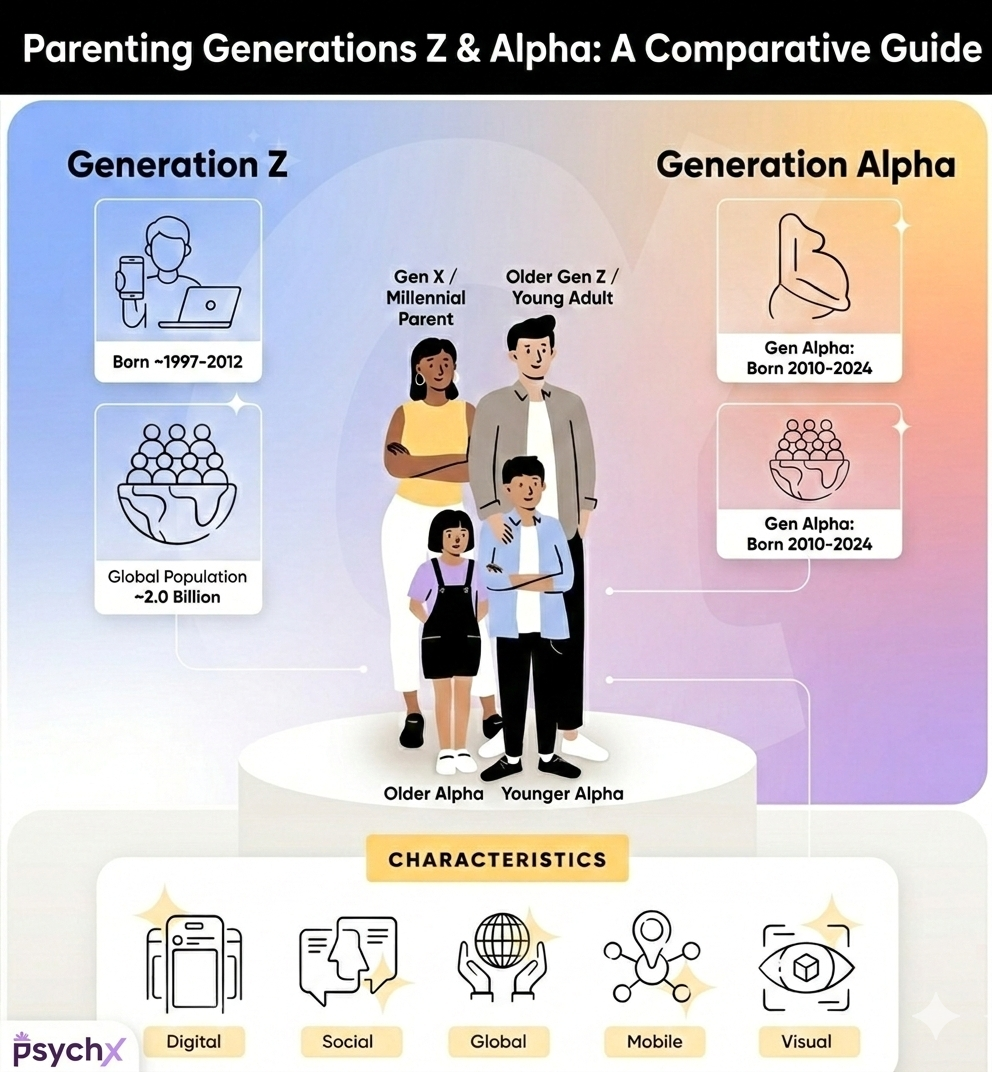
Parenting Gen Z and Gen Alpha: The Thin Line Between Discipline and Trauma
Discipline vs. Trauma: Know the Difference
DISCIPLINE
Teaches why behaviour matters
Focuses on the action, not the child
Builds connection
Has a clear, logical consequence
Ends with repair and reconnection
TRAUMA
Uses fear to control behaviour
Attacks the child's character
Breaks trust
Is unpredictable or excessive
Ends with the child feeling alone
The Red Flags
Your "discipline" might be crossing into trauma territory if:
Your child fears you — Respect ≠ Fear
You're using shame — "You're so bad" vs "That choice was unhelpful"
No repair happens — You lecture, punish, and walk away
It's about your ego — You're more angry about disrespect than the actual behaviour
Your child shuts down — They stop coming to you with problems
What Actually Works for Gen Z & Alpha
1. Collaborative Boundaries
These kids don't respond to "Because I said so." Explain the why behind rules.
"No phones at dinner!" (This is authoritarian, likely to cause rebellion)
"Phones at dinner disconnect us. Let's eat together for 20 minutes, then you can check your messages." (A better approach, explaining the why?)
2. Natural Consequences
Let them experience results (safely), don't manufacture punishment.
They forget their homework → They face the teacher (don't rescue)
They stay up late gaming → They're tired the next day (don't lecture)
3. Emotion Coaching
Name the feeling before correcting the behaviour.
"You're frustrated the game ended. It's okay to be mad. It's not okay to throw the controller."
4. The Repair Ritual
When you mess up (and you will), model accountability:
"I yelled earlier. That wasn't okay. I'm sorry. Let's try again."
This teaches them that mistakes don't define them — and relationships can survive conflict.
The Bottom Line
Discipline builds a child who thinks, "I made a mistake, I can do better."
Trauma builds a child who thinks, "I am a mistake, I need to hide."
Gen Z and Alpha don't need softer parenting — they need smarter parenting. Clear boundaries, consistent expectations, and unwavering connection.
Quick Check: Ask Yourself
Does my child feel safe coming to me with mistakes?
Do I explain the reason behind my rules?
Do I repair after conflict?
Am I disciplining the behaviour — or my own frustration?
If you're unsure, ask your kid. They'll tell you.
Parenting these generations isn't about being perfect. It's about being present, accountable, and willing to grow alongside them.
