The Connection Between Physical and Mental Health
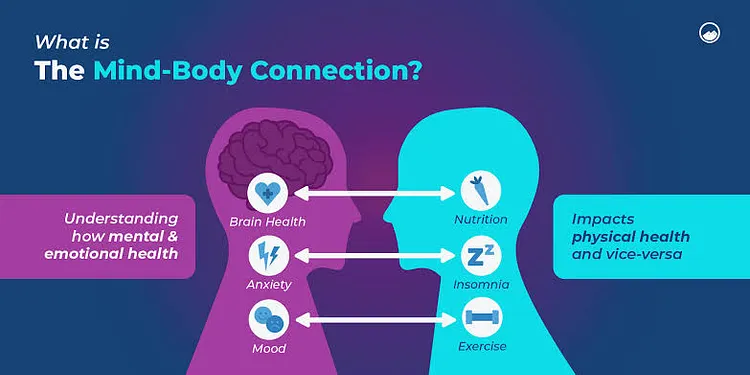
Physical and mental health are deeply interconnected. Changes in one directly affect the other in a continuous two-way relationship.
How Physical Health Influences Mental Health
Exercise: Releases endorphins and BDNF, reducing depression and anxiety while improving mood, focus, and resilience.
Sleep: Quality sleep (7-9 hours) regulates emotions and prevents heightened stress responses. Poor sleep increases risk of anxiety and depression.
Nutrition: Omega-3s, complex carbs, and a healthy gut microbiome support neurotransmitter production and lower inflammation linked to mental health issues.
How Mental Health Affects the Body
Chronic stress and anxiety raise cortisol, leading to high blood pressure, weakened immunity, digestive problems, and weight gain.
Depression often manifests as fatigue, headaches, muscle tension, and chronic pain.
Positive mental states encourage better habits like regular exercise and healthy eating, creating an upward spiral.
Practical Steps to Strengthen Both
Move daily – even 20-minute walks help.
Prioritize consistent, quality sleep.
Eat whole foods rich in nutrients that support brain health.
Practice mindfulness, deep breathing, or yoga.
Build strong social connections.
Seek professional help when needed.
Your body and mind are not separate—they work as one system. Investing in physical health builds mental strength, and nurturing your mind supports physical well-being.
Start small today. Every healthy choice benefits both.
